
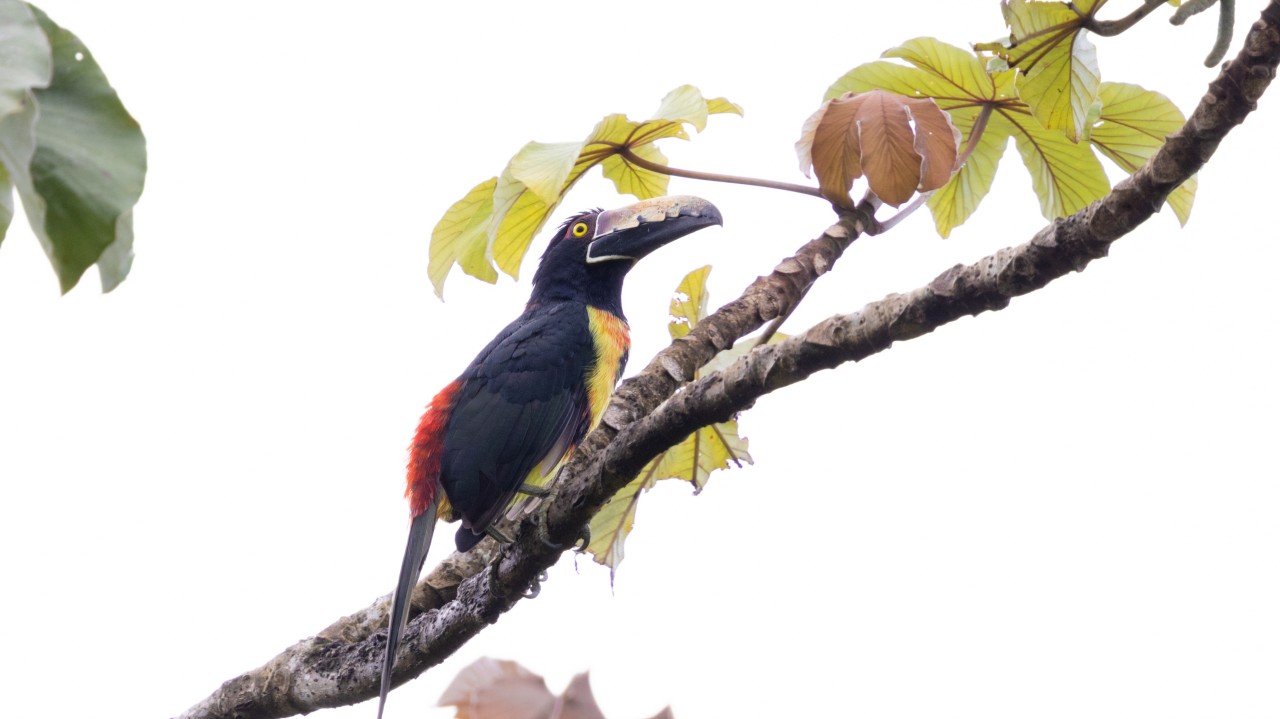
Imagine a ripe fruit hanging from a branch. A bird finds it, eats it, and continues on its way. Later, a seed reaches the ground somewhere else. It might germinate; it might not. But that small journey holds an important possibility: a plant may find a new place to grow.
This is one way animals help disperse seeds. Some carry them after eating fruit; others may move or store them.
A 2022 study led by Sergio Estrada-Villegas explored this relationship in naturally regenerating forests in central Panama. The researchers compared secondary forests of different ages, from roughly 20 to 100 years after land abandonment, with mature forests.
They examined the plants growing in these forests and connected them with their potential dispersers: small and large birds, bats, and non-flying mammals. This allowed the team to explore how the representation of plants associated with different groups changed as forests recovered.
By linking plants to the animals that disperse their seeds, the study offers a glimpse of how those relationships change as tropical forests recover. That perspective is particularly compelling for the Mamoní Valley Preserve, where mature forests, secondary forests and recovering ecosystems coexist. These different environments invite us to think of the landscape as a network of relationships: plants can produce seeds, animals that may carry them, and spaces where some seeds might become established.
Forest recovery takes time and depends on more than any single interaction. Protecting existing forests and caring for the conditions that support wildlife and regeneration are complementary parts of a broader conservation conversation.
The next time we see an animal eating fruit, perhaps we can also imagine the journey beginning for its seeds.
#TropicalForests #Biodiversity #EcologicalRestoration #Panama #MamoniValley

Leave a Reply